
A Meadow Mindset: How Mapperton Estate’s Wildflower Meadows can Inspire your Planting
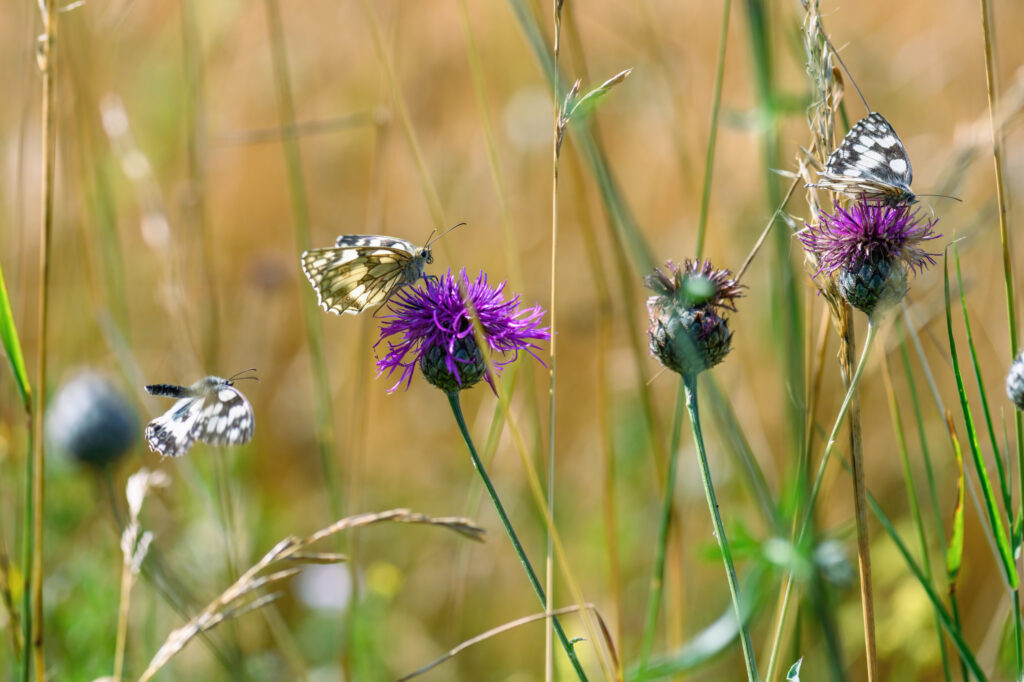
Inspired by projects such as the rewilding initiative at Mapperton Estate, gardeners can create wildflower spaces by adopting a light-touch approach that allows natural processes to emerge from grass-rich cultivated gardens. Over the last few years, Mapperton Estate has been transforming large areas of marginal farmland back into nature-rich landscapes, encouraging a mosaic of habitats where grazing animals, natural seed dispersal and reduced management allow plants and wildlife to flourish.
In gardens, this philosophy can be replicated on a smaller scale by reducing mowing, lowering soil fertility and sowing native wildflowers suited to local conditions. Leaving areas of grass to grow longer and cutting only once or twice a year allows perennial meadow plants to establish and set seed. Introducing diverse native species increases structural variety, which in turn supports pollinators and other insects.
Key meadow plants play an important role in building a resilient wildflower community. Yellow yarrow (Achillea filipendulina) provides long-lasting nectar sources for pollinators and helps stabilise meadow soils. Tall species such as wild foxglove (Digitalis purpurea) add vertical structure and attract bees, while early bloomers like cowslip (Primula veris) provide vital spring nectar. Other classic meadow plants including birdsfoot trefoil (Lotus corniculatus), common knapweed (Centaurea nigra) and oxeye daisy (Leucanthemum vulgare) enrich biodiversity by supporting butterflies, bees and seed-eating birds.
Suppressing established grass in gardens can be challenging. Yellow rattle (Rhinanthus minor) draws nutrients from the roots of neighbouring grasses thus weakening these dominant grasses, helping to reduce their vigour and creating space for less competitive wildflowers to establish. For this reason, it is often introduced when restoring species-rich meadows from heavily improved grassland, and can do the same in a lawn, gradually opening it up and allowing a wider range of more delicate, traditional wildflower plants to emerge and thrive.
Fragrant meadowsweet (Filipendula ulmaria) naturally thrives in moist soils, making it particularly suitable for areas such as damp meadows, pond margins, ditches, or poorly drained parts of a garden. Because it tolerates seasonal flooding and consistently damp conditions, it helps fill a niche where many traditional meadow plants struggle. It combines well with other moisture-loving meadow species such as marsh marigold (Caltha palustris), ragged robin (Lychnis flos‑cuculi) and devil’s-bit scabious (Succisa pratensis).
Many gardens will already have a variety of meadow plants that with some careful management – and reducing polygonum weed species that are ultra-competitive and can rob any moisture from the more sensitive wildflower species – can be given the chance to flourish. By combining reduced intervention with carefully chosen native plants, gardeners can create small-scale rewilded spaces that echo the ecological principles demonstrated at Mapperton. Take a look around your garden for autumn hawkbit, yarrow, saxifrage, tufted vetch, forget-me-not, meadow buttercup and common selfheal – you may already be out of the starting block to creating a spectacular wildflower area perfect for wildlife.