Deer at Mapperton
Roe, Fallow, Sika or Muntjac? What’s the difference?
Four of the six species of deer resident to the UK are found on Mapperton Estate: primarily roe and fallow and sometimes sika deer with the occasional muntjac.
Roe Deer (Capreolus capreolus)
The roe deer is one of just two native deer in the UK (the other being the red deer). It is the most common, medium-sized and brown in colour with a pale rump and no tail. They have round faces with black noses and the males (bucks) have small, short antlers which they shed in October after the rutting season. The roe deer is usually a solitary species, though they can form loose groups in winter. Whilst they are widespread throughout Scotland and England, they are not so common in Wales, the Midlands, and Southern England so we are pleased that they have found a home here at Mapperton.

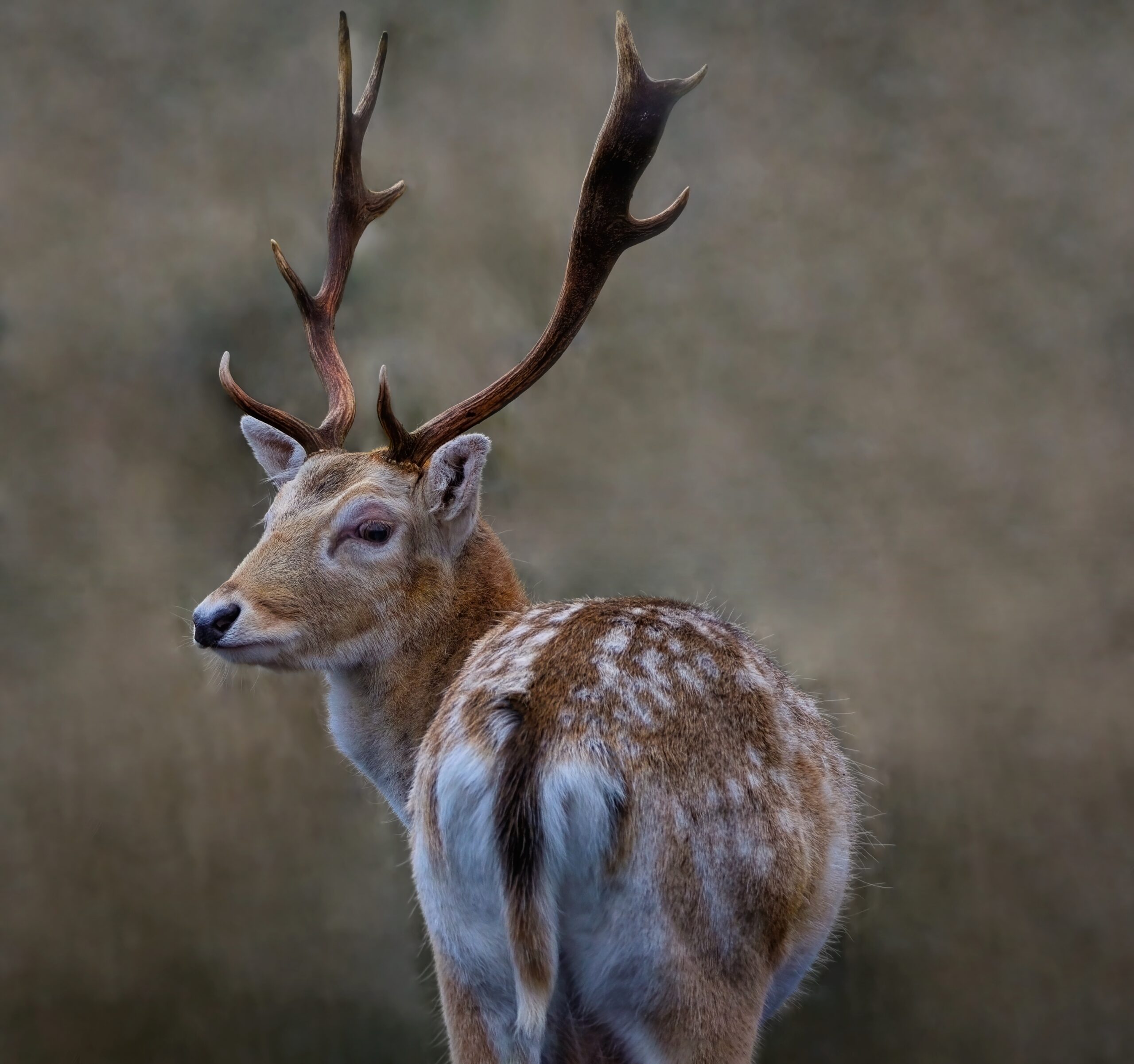
Fallow Deer (Dama dama)
The fallow deer is non-native but very well established in the UK as they were introduced by the Normans in the 11th century in private collections. Slightly larger than roe deer, fallow deer are easily distinguished by their spotted coats, with a black and white tail and a black outlined white rump. Their coat colour is highly variable, from a deep brown to almost white. The males have large, palate antlers.
Sika Deer (Cervus nippon)
Sika deer are a non-native species now living in the wild, having been introduced to the UK in the 1860’s in ornamental deer parks. Native to Asia, with the name “sika” coming from the Japanese word for deer ‘shika’, numbers are increasing in the UK, where they have become extinct in large areas of their native range. Often confused with fallow deer, they are similar in size and coat, but a sika’s coat is usually darker and they have slightly shorter tails than fallow deer. The males are significantly larger than the females and like fallows, sikas keep their spots in adulthood. Male sika deer have large branched but narrow antlers.

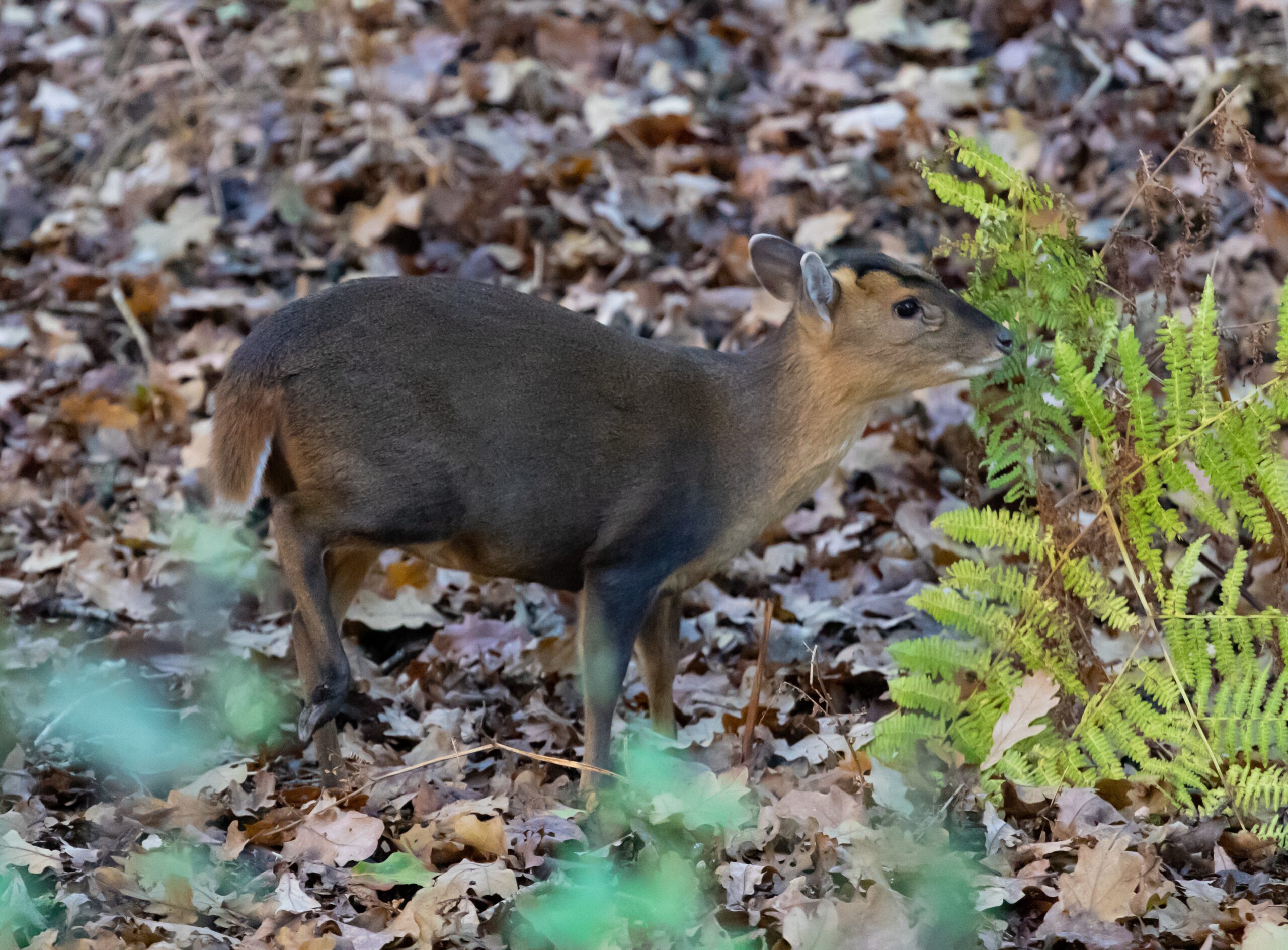
Muntjac Deer (Muntiacus reevesi)
Perhaps one of the least welcome visitors to Mapperton is the small, Chinese muntjac deer, common across southeast England following its introduction to Woburn Park in Bedfordshire at the start of the 20th century. Muntjac deer are notorious browsers, eating the shoots from shrubs, as well as woodland herbs and brambles so can have a rather detrimental impact on rewilding efforts.
A small, stocky deer, the muntjac is about the same size as a medium dog. It is gingery brown, with a pale underside, darker stripes in its face, and the males have small, unbranched antlers that slope backwards.